Hi everyone !
I used ReScript as the main language for my projects before LLMs because of the typing system and code clarity.
This year was very intense, with the release of tilia 6, the work on tilia/query, and a database project (to be released as beta soon).
Just a year ago…
As agents arrived, they were confused with the flavors, old and new, of ReScript.
I had to check a lot of manual code for my numinum app experiment (React native app to train mental calculation)

Today, I exclusively work with ReScript for all my projects and I don’t need to guide the agents (but I give them llms.txt for tilia or other libraries).
It has given me an incredibly good and fast (and cheap) development flow, even for large projects (a database engine on top of RocksDB, around 80k loc).
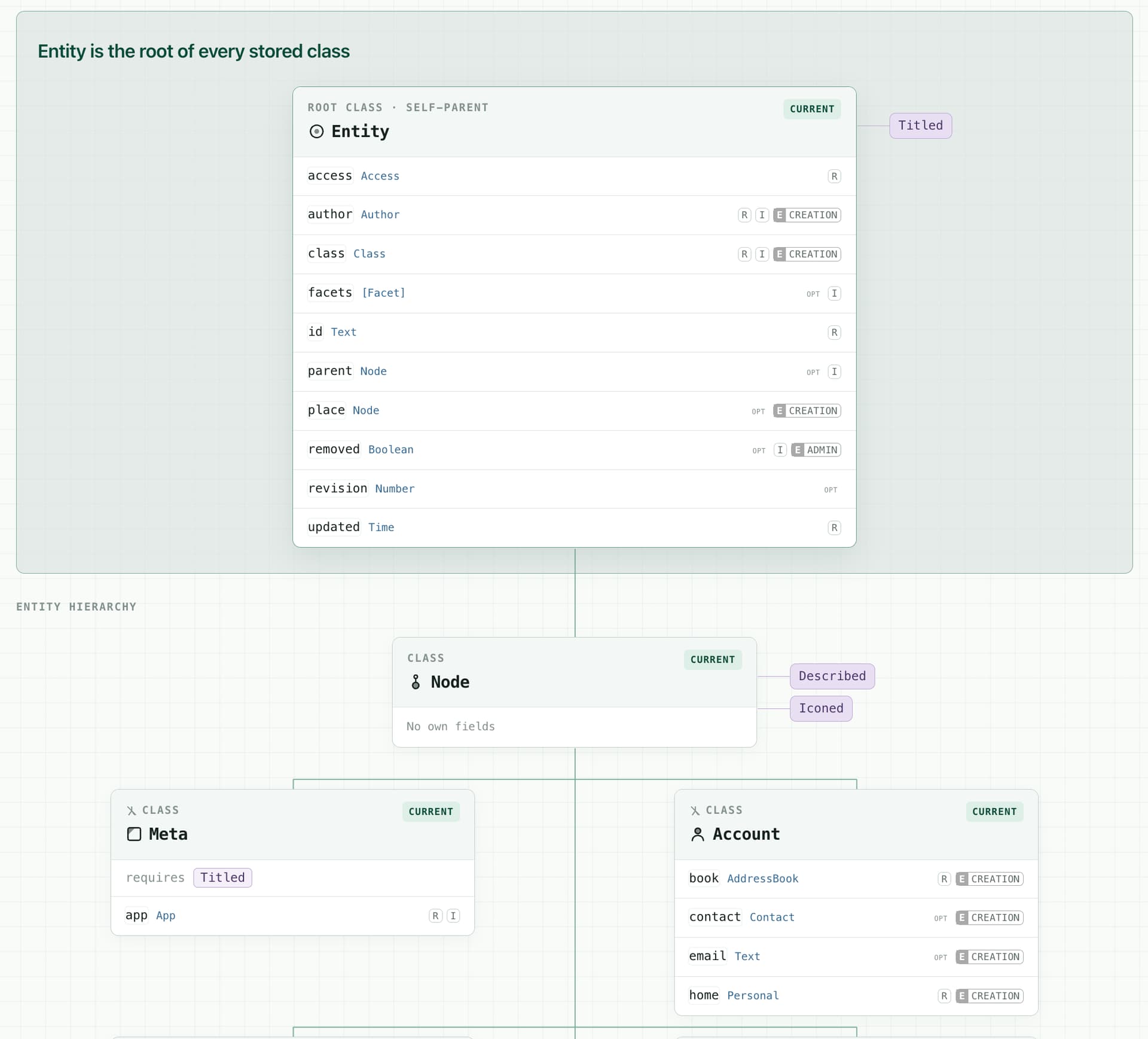
Radif class inheritance diagram.
Since RocksDB is a blocking API, I decided for a purely channel based API in all of the codebase except the IndexedDB adaptor for the client. The code ended up deeply nested with callbacks (I think it reached 30??), until I used let? which saved the shape of the code, but didn’t save from the stack overflows as the project grew.
Two solutions emerged : bouncing, and looping (claude drawings).
In my day job, I had to touch java and legacy angular code (TS) for upgrades and I realize how a fast, incremental build totally changes the time it takes for agents to run.
My architectures now always push for two things:
- Using ReScript whenever possible, no questions asked
- Using dependency injection everywhere and ensure most of the tests are running concurrently
One is for the fast build and the other for the fast feedback loop.
Has anyone had that similar experience ? Have you also switched to ReScript for this reason ?